

?unique=75e195c)
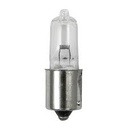

3011 – Incandescent Aviation Light Bulb (28V)
Available now through the AirParts Aero marketplace.
Overview Section
The 3011 is a high-intensity, heavy-duty Incandescent Miniature Lamp specifically designed for 28-volt aircraft electrical systems.1 It is primarily used as a Reading Light, Map Light, or Cabin Spotlight in various general aviation and business jet airframes.
The 3011 features a Single Contact Bayonet Base (BA15s) and a specialized C-2V filament structure.2 This filament is engineered to withstand the high-frequency vibrations and gravitational forces (G-loads) common during takeoff, landing, and turbulence—conditions that would cause standard commercial bulbs to fail prematurely.
Key Features Section
Aviation-Grade Vibration Resistance: Built with a reinforced filament support system to prevent "filament sag" or breakage during taxi and engine ground runs.
Standard Bayonet Base (BA15s): Features a 15mm single-contact base for a secure, "twist-lock" installation that won't vibrate loose.3
Optimized for 28V Systems: Specifically rated for the 24V/28V DC electrical architectures found in most turboprops and business jets.
High Lumen-to-Size Ratio: Provides a concentrated beam of warm white light, ideal for illuminating cockpit charts or passenger cabin workstations.
Glass Envelope (S8 Shape): The S8 bulb shape is clear and heat-resistant, ensuring consistent light output throughout the life of the lamp.
Immediate Full-Brightness: Unlike some gas-discharge lamps, the 3011 provides instantaneous illumination upon power-up, critical for emergency or cockpit utility lighting.
Technical Specifications Section
| Specification | Detail |
| Part Number | 3011 |
| Voltage | 28.0 Volts |
| Amperage | 0.67 Amps |
| Wattage | 18.76 Watts |
| Base Style | Single Contact Bayonet (BA15s) |
| Bulb Shape | S8 |
| Filament Type | C-2V |
| Luminous Flux | Approx. 15 Candlepower (MSCP) |
| Average Rated Life | 1,000 Hours (Standard Operating Conditions) |
Aircraft Compatibility Section
The 3011 is a high-utilization consumable found in the cabin and cockpit lighting suites of many airframes in the AirParts Aero inventory:
Beechcraft King Air: Frequently used in the overhead passenger reading light assemblies and the "swing-arm" map lights in the cockpit of the 90, 200, and 300 series.
Cessna Citation: Utilized in interior utility lighting and baggage compartment illumination across the 500/525/550 series.
Piper Cheyenne/Navajo: Common in the passenger cabin spotlighting for 28V variants.
Hawker 800/900XP: Found in secondary interior lighting and closet/utility area illumination.
Technical Applications & Safety
While the aviation industry is moving toward LED retrofits, the 3011 incandescent bulb remains critical for many dimming circuits. Because many older aircraft use rheostats to control light intensity, the 3011 provides a smooth, linear dimming curve that some early-generation LEDs cannot replicate without flickering.
Safety Warning: Incandescent bulbs generate significant heat during operation.4 Ensure the lens assembly and surrounding housing are clean and that the bulb is not in contact with plastic trim or upholstery. Always verify the voltage of your aircraft's electrical system before installation; installing a 3011 (28V) in a 14V system will result in extremely dim light, while installing a 14V bulb in a 28V system will cause an immediate "blow-out" and potential fuse trip.
Technical Engineering Insight
The engineering value of the 3011 lies in its Thermal Management and Filament Integrity. The C-2V filament is a "coiled-coil" design that maximizes the incandescent surface area within a small footprint. This allows the bulb to produce a high candlepower (MSCP) without requiring a large, fragile glass envelope.
By choosing the 3011 through AirParts Aero, you ensure the bulb meets the SAE-ARP standards for miniature lamps. These standards dictate the exact gas mixture (usually argon/nitrogen) inside the bulb, which prevents the tungsten filament from evaporating and darkening the glass—a common failure mode in low-quality "off-the-shelf" bulbs that leads to decreased visibility in the cockpit.
Installation & Maintenance Addendum
Clean Handling: Avoid touching the glass with bare fingers. Skin oils can create "hot spots" on the glass envelope, potentially causing it to crack or fail prematurely under heat.5 Use a clean cloth or gloves.
Socket Inspection: Before installing a new 3011, inspect the single-contact spring in the socket for corrosion or "arcing" marks, which can cause intermittent flickering.
Bayonet Engagement: Ensure the bulb is fully pushed and twisted into the locked position. A partially seated bayonet can create high resistance and heat, eventually melting the socket housing.
