

?unique=a4499e5)

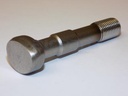
LW12186 – Lycoming Engines Genuine OEM Connecting Rod Bolt Nut
Available now through the AirParts Aero marketplace.
Overview Section
The Lycoming LW12186 is a genuine OEM (Original Equipment Manufacturer) connecting rod nut, specifically designed for use with high-strength connecting rod bolts in Lycoming 360 and 540 series engines. As a critical engine fastener, this nut is responsible for maintaining the "clamp load" on the connecting rod big-end cap, ensuring that the rod bearings stay seated and the rod assembly remains intact under extreme centrifugal and reciprocating forces.
Unlike standard hardware, the LW12186 is manufactured from high-tensile alloy steel and features precision-machined threads and a specialized base to ensure even distribution of torque. This fastener is a "safety-of-flight" component; a failure here leads to immediate and catastrophic engine destruction.
Key Features Section
High-Tensile Alloy Steel: Engineered to withstand the massive "stretch" and tension required to keep connecting rod caps secure at high RPMs.
Precision Thread Class: Features tight-tolerance threads designed to match the high-strength LW12181 (or equivalent) rod bolts, minimizing the risk of thread stripping or fatigue.
Heat-Treated for Durability: Subjected to rigorous thermal processing to achieve the specific hardness required to prevent "creep" or loosening during thermal cycling.
Corrosion Protection: Typically finished with a specialized coating to resist the acidic environment of hot engine oil.
Low-Profile Design: Optimized for clearance within the tight confines of the engine crankcase and oil sump.
Genuine Lycoming Quality: Meets the exact metallurgical and dimensional standards specified in the FAA Type Certificate.
Technical Specifications Section
| Specification | Detail |
| Part Number | LW12186 |
| Manufacturer | Lycoming Engines |
| Material | High-Strength Alloy Steel |
| Application | Connecting Rod Assembly (Big-End Cap) |
| Thread Size | Specifically matched to Lycoming Rod Bolts |
| Certification | FAA-PMA / OEM |
| Replacement Policy | Generally Single-Use (Consult Service Manual) |
Engine Compatibility Section
The LW12186 nut is utilized in the connecting rod assemblies of Lycoming’s most widely used engines:
Lycoming 360 Series: O-360, IO-360, AEIO-360, and TIO-360.
Lycoming 540 Series: O-540, IO-540, AEIO-540, and TIO-540.
Aircraft Platforms: Found in the Cessna 172/182, Piper Arrow/Saratoga, and high-performance aerobatic aircraft like the Extra 300.
Technical Applications & Safety
The connecting rod nut is part of a "tension-loaded" system. To work correctly, the bolt must be stretched like a very stiff spring.
Safety Warning: Single-Use and Fastener Stretch.
Lycoming strongly recommends that connecting rod nuts and bolts be replaced at every engine overhaul or whenever the rod cap is removed. Fasteners that have been torqued to their yield point once may not maintain the same clamp load if reused, leading to "rod cap walk" and bearing failure.
The Stretch Method:
For maximum accuracy, Lycoming recommends the Bolt Stretch Method over a simple torque wrench reading. Using a specialized micrometer, the technician measures the bolt before and after tightening. The LW12186 nut must be tightened until the bolt reaches a specific stretch (typically between 0.004" and 0.006"), ensuring the most consistent clamp load possible.
Installation & Maintenance Addendum
Thread Lubrication: Always lubricate the threads and the base of the LW12186 nut with clean engine oil or a specified assembly lube (like STP or Lycoming Moly-Lube) before installation to ensure an accurate torque/stretch reading.
No Impact Wrenches: Never use an impact wrench to tighten these nuts. The sudden shock can damage the threads or over-stress the bolt.
Correct Orientation: Ensure the nut is seated squarely against the rod cap. Any misalignment will result in an uneven load, which can cause the bolt to snap under the reciprocating loads of flight.
