

?unique=79f861d)
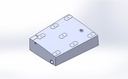

2535-13 – FFC FAA-PMA Fuel Cell BD With Instructions for King Air Aircraft
Available now on the Airparts.aero Marketplace.
Overview
The FFC 2535-13 is a premium, FAA-PMA certified, crash-resistant bladder fuel cell manufactured by Floats & Fuel Cells, Inc. (FFC). It is engineered as a direct and superior replacement for the Textron/Beechcraft OEM part number 50-920101-109 for the Left-Hand Inboard Main Tank of the Beechcraft King Air 200 and B200 series aircraft. FFC is a world leader in fuel containment technology, and this fuel cell represents the culmination of decades of materials science and manufacturing innovation. Its primary function is to safely and reliably store jet fuel within the wing, providing a durable, leak-proof barrier that is critical to the aircraft's safety and operational readiness.
This fuel cell is manufactured using FFC's proprietary, high-strength polyurethane composite material, which is laminated in multiple layers for exceptional puncture and tear resistance. Critically, the entire cell is built using a monolithic, seamless construction method, where all fittings and corners are vulcanized in an autoclave. This eliminates the traditional seams that are the most common points of failure and leaks in older-technology fuel cells. As a fully FAA-PMA approved part, the FFC 2535-13 has been rigorously tested to prove it meets or exceeds the performance and safety standards of the original part, making it the premier choice for operators seeking longevity, reliability, and value.
Key Features
FAA-PMA Certified: A fully certified, airworthy replacement for Textron/Beechcraft P/N 50-920101-109, backed by extensive FAA-approved testing and analysis.
Advanced Polyurethane Composite: Fabricated from FFC's proprietary, state-of-the-art polyurethane material, offering superior durability, abrasion resistance, and service life.
Monolithic Seamless Construction: The entire bladder, including all fittings, is vulcanized into a single, seamless unit, dramatically increasing strength and eliminating the risk of seam leakage.
Crash-Resistant Design: Engineered to meet or exceed the stringent FAA crashworthiness standards, designed to deform and resist rupture to prevent post-impact fires.
Static-Dissipating Exterior: Treated with a conductive outer coating to safely dissipate static electricity buildup from fuel sloshing, preventing ignition hazards.
Includes Detailed Installation Instructions: Supplied with FFC's comprehensive, illustrated instructions for a safe and efficient installation process.
Technical Specifications
Part Number: 2535-13
Component Type: Bladder-Type Main Fuel Cell
OEM Manufacturer: Floats & Fuel Cells, Inc. (FFC)
Certification: FAA-PMA (Replaces Textron/Beechcraft P/N 50-920101-109)
Aircraft Location: Left Hand, Inboard Main Tank
Material: Proprietary Multi-Layer, Fabric-Reinforced Polyurethane Composite
Governing Specifications: FAA-PMA, meets or exceeds airframe manufacturer and FAA standards (e.g., MIL-DTL-6396F).
Aircraft Compatibility
Beechcraft (Textron Aviation): King Air C90, King Air 200, King Air B200
Note: This is a flight-critical component. The aircraft's serial number and its Illustrated Parts Catalog (IPC) are the final and absolute authorities for determining part number eligibility.
Applications
Primary Fuel Storage: Serves as the primary fuel containment vessel for the left-hand main fuel system.
Direct OEM Replacement: A certified, direct replacement for a time-expired, damaged, or leaking original equipment fuel cell.
Why Choose 2535-13?
The FFC 2535-13 offers a compelling combination of advanced technology, certified safety, and long-term value. As an FAA-PMA part from a leading fuel cell specialist, it has been proven to be at least equivalent, and is often superior, to the original part in terms of material durability and construction quality. The monolithic, seamless design is a significant technological advantage that directly addresses the most common failure mode of older fuel cells. For operators of King Air 200/B200 aircraft, choosing the FFC 2535-13 provides the assurance of a brand-new, state-of-the-art, crashworthy fuel cell with a leading industry warranty, ensuring the highest level of safety and reliability.
The engineering superiority of the FFC 2535-13 fuel cell lies in its monolithic, autoclave-cured (vulcanized) construction. Unlike older manufacturing methods that relied on cementing or sewing seams after the main body was formed, FFC's process involves assembling all raw, uncured layers of the polyurethane composite, fabric reinforcement, and all metallic fittings together in a precision mold. The entire assembly is then cured as one piece under immense heat and pressure in an autoclave. This process induces covalent cross-linking of the polymer chains throughout the entire structure, including the critical junctions between the flexible bladder material and the rigid metal fittings. The result is a single, seamless, monolithic vessel with no distinct joints or seams. This eliminates the potential for adhesive degradation or seam delamination over time due to fuel exposure and flexural stress, yielding a fuel cell that is substantially stronger, more durable, and far less prone to leaks than a seamed cell.
Note: The 2535-13 is a flight-critical airframe component. Due to the complexity and safety-critical nature of the installation, this work must be performed by a certified A&P/IA mechanic with specific experience on King Air fuel systems. The procedure requires meticulous preparation of the wing cavity, specialized techniques to fold and insert the bladder without damage, and precise connection and sealing of all fuel lines, vents, and transmitter wiring, all in strict accordance with the included FFC instructions and the aircraft maintenance manual.
Documentation
All authoritative technical data and step-by-step procedures are contained within the proprietary Installation Instructions supplied with the fuel cell and the official Textron Aviation King Air 200/B200 Series Maintenance Manual. Additional technical and warranty information is available on the Floats & Fuel Cells, Inc. website.
