

?unique=91f3e7e)

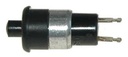
CA486-440 – PMA Products FAA-PMA Oil Pressure Sender Transducer Transmitter
Available now on the Airparts.aero Marketplace.
Overview
The PMA Products CA486-440 is a flight-critical, FAA-PMA approved oil pressure sender transducer, an essential sensor for the engine indication systems of a wide range of Piper aircraft. This is not a simple pressure switch; it is a high-precision, variable-resistance transducer designed as a direct replacement for the original Piper OEM P/N 486-440. The CA486-440's function is to convert engine oil pressure into a proportional electrical signal, providing the continuous, real-time data that is sent to the cockpit pressure gauges, giving the pilot one of the most vital indications of engine health.
Manufactured by PMA Products, a leader in high-quality PMA components, this transducer is engineered for exceptional accuracy and durability. Its robust design ensures it can withstand the extreme temperatures and intense vibration of the firewall-forward environment, providing reliable data for safe engine operation.
Key Features
Variable-Resistance Transducer: At its core is a variable resistor (rheostat) mechanism, typically a precision wire-wound element with a wiper arm. The wiper is mechanically linked to a pressure-sensitive diaphragm, providing a smooth and linear change in electrical resistance that is directly proportional to the applied oil pressure.
High-Accuracy & Stability: Engineered to provide accurate and stable pressure readings across its full operational range. This is essential for the pilot to make correct power setting decisions and to detect subtle changes in engine health.
Durable, Sealed Construction: The entire assembly is housed in a hermetically sealed, corrosion-resistant metal case. This protects the sensitive internal mechanisms from moisture, engine fluids, and contaminants, ensuring a long and reliable service life.
Direct PMA Replacement: A certified FAA-PMA direct replacement for Piper P/N 486-440, guaranteeing perfect form, fit, and electrical function without any modification.
Cost-Effective Reliability: Provides a high-quality, airworthy, and cost-effective alternative to the original OEM component, backed by the rigorous testing and quality control of the FAA-PMA process.
Technical Specifications
Part Number: CA486-440
Component Type: Oil Pressure Sender / Transducer
OEM Manufacturer: PMA Products, Inc.
OEM Replacement for: Piper P/N 486-440
Sensing Technology: Variable Resistance (Rheostat)
Pressure Range: Calibrated for Lycoming engine oil pressure systems (typically 0-100 PSI).
Electrical Output: Variable Resistance (Ohms)
Plumbing Connection: Standard 1/8-27 NPT male pipe thread.
Electrical Connection: Threaded Stud Terminal
Certification: FAA-PMA
Aircraft Compatibility
The CA486-440 is a widely applicable sensor used on some of the most popular and successful general aviation aircraft ever built. It is imperative to consult the specific aircraft's Illustrated Parts Catalog (IPC) for final verification.
Common Piper Aircraft Platforms:
PA-28 Series: Cherokee, Warrior, Archer, Arrow
PA-32 Series: Cherokee Six, Lance, Saratoga
PA-34 Series: Seneca
PA-44 Series: Seminole
Applications
The CA486-440 is a flight-critical sensor for all phases of flight:
Primary Engine Monitoring: Provides the raw data for the cockpit oil pressure gauge, a primary flight instrument. A loss of oil pressure is a critical in-flight emergency requiring immediate action.
Engine Start & Health Check: Allows the pilot to confirm a positive rise in oil pressure immediately after engine start, verifying the health of the lubrication system.
System Troubleshooting: The primary component to test and replace when diagnosing an inaccurate, pegged, or inoperative oil pressure indication.
Why Choose CA486-440?
An accurate oil pressure reading is arguably the single most important indication of a piston engine's health. A faulty sender can provide a dangerously false sense of security or cause an unnecessary precautionary engine shutdown. The PMA Products CA486-440 is a high-quality, FAA-PMA certified alternative to the OEM part, often at a significant cost savings. For a primary engine instrument sensor, a trusted and certified PMA part is a smart and safe choice.
The PMA Products CA486-440 transducer is a simple but highly reliable analog sensor. Internally, high-pressure engine oil enters the unit and acts upon a flexible metal diaphragm or bellows. This diaphragm is mechanically connected via a small linkage to a wiper arm. The wiper arm moves across the surface of a wire-wound resistor card. As the oil pressure increases, the diaphragm flexes, moving the wiper arm across the resistor and changing the total resistance between the sensor's output terminal and its ground. The cockpit gauge is essentially a ratiometric voltmeter that interprets this change in resistance and displays it on a calibrated PSI scale. This direct, mechanical-to-electrical conversion is extremely robust and is not susceptible to the software or processing failures that can affect more complex digital sensors, making it a time-proven solution for primary engine instrumentation.
Note: This is a flight-critical engine instrument sensor. Installation must be performed by a certified A&P mechanic. Use an appropriate thread sealant on the pipe threads to ensure a leak-proof seal. Do not overtighten, as this can damage the transducer or the engine case. Verify a correct and stable pressure reading after installation and engine run-up.
