

?unique=c91cc11)
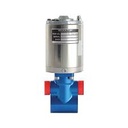
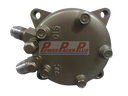
JE-5 – Textron Aviation OEM Switch Actuator Assembly Kit
Available now through the AirParts Aero marketplace.
Overview Section
The JE-5 is a genuine Textron Aviation OEM Switch Actuator Assembly Kit, engineered for precise mechanical-to-electrical interfacing within Cessna and Beechcraft aircraft. This kit provides the hardware necessary to translate physical movement (such as the extension of landing gear, the movement of a flap, or the closing of a door) into a switch activation that signals the cockpit or avionics suite.
Unlike standard industrial switch hardware, the JE-5 is designed to maintain consistent actuation points under the high-vibration and extreme temperature gradients of an aerospace environment. It ensures that critical "Up/Down" or "Open/Closed" logic is reported accurately to the pilot, preventing false "unlocked" indications or system malfunctions.
Enhanced Technical Data
| Technical Metric | Specification Data |
| Component Type | Mechanical Switch Actuator / Linkage Kit |
| Material Base | 300 Series Stainless Steel / Anodized Aluminum |
| Overtravel Protection | Integrated spring-loaded buffering |
| Operating Temperature | $-65°F$ to $+185°F$ ($-54°C$ to $+85°C$) |
| Adjustability | Threaded fine-pitch adjustment for precision "Set Point" |
| Cycle Life | Rated for > 100,000 operations |
| Hardware Finish | Cadmium Type II / Passivated CRES |
| Certification | FAA-PMA / OEM Certified |
| ATA Chapter | ATA 32 (Landing Gear) / ATA 27 (Flight Controls) |
Advanced Engineering & Structural Application
The JE-5 assembly is engineered for Repeatability and Tolerance Management. In aviation systems, a microswitch is only as reliable as the actuator that triggers it. The JE-5 utilizes a "lost-motion" or spring-loaded design to prevent damage to the switch itself if the mechanical component it is monitoring (like a heavy landing gear strut) moves beyond the contact point.
Engineering Insight: Hysteresis and Set-Point Precision
The JE-5 kit allows for minute adjustments to the "Set-Point"—the exact moment the switch transitions from open to closed. This is vital for Squat Switches (Weight-on-Wheels) or Flap Position Indicators, where a fraction of an inch can be the difference between a system engaging or remaining inhibited. The use of high-grade stainless steel components ensures that the actuator does not suffer from "creep" or deformation over time due to thermal expansion or mechanical wear.
Aircraft Compatibility
The JE-5 is a high-utilization assembly kit used across various Textron platforms for sensing critical component positions:
Cessna Citation Series (500/525/550/560): Used in landing gear "Down-and-Locked" and "Up-Stop" sensing assemblies.
Beechcraft King Air (90/100/200/300): Often utilized for door warning light activation and landing gear position indicators.
Cessna 208/208B Caravan: Found in flap position sensing linkages and cargo door safety interlocks.
The Textron Aviation JE-5 is the definitive kit for maintaining the integrity of your aircraft’s position-sensing systems. Whether you are troubleshooting a landing gear indication fault or overhauling a flap system, utilizing the JE-5 ensures that your mechanical set-points meet factory specifications. This OEM assembly eliminates the "slop" and inconsistent triggering associated with worn aftermarket or legacy hardware. By choosing genuine Textron JE-5 components, you secure the accuracy of your cockpit annunciators and ensure that critical system logic remains airworthy and reliable.
Installation & Maintenance Addendum
Rigging and Clearance: When installing the JE-5, refer to the Aircraft Maintenance Manual (AMM) for specific "Clearance" and "Overtravel" dimensions. Improper rigging can result in the actuator "bottoming out" against the switch, leading to internal switch failure.
Thread Security: Once the set-point is adjusted, ensure all jam nuts and locking hardware provided in the kit are secured. Many JE-5 applications require the use of safety wire (MS20995) to prevent vibration-induced shifts in the set-point.
Lubrication: Avoid applying heavy grease to the actuator plunger unless specifically called for in the AMM. Heavy lubricants can attract grit and FOD, causing the actuator to stick in the "depressed" position.
